
Learn solitaire
How to Play Klondike
Build all four foundations from Ace to King.
Learn the rules, find your next move, and explore more ways to play. Start with three simple steps.

The goal of Klondike
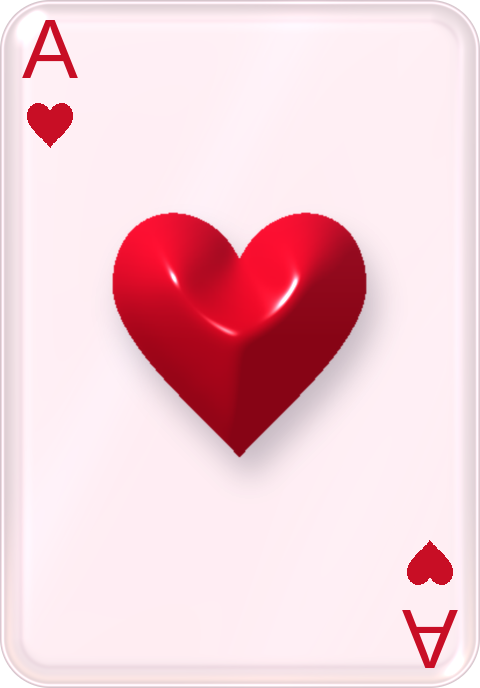
Klondike is the solitaire most people picture: one standard 52-card deck, seven columns and four empty piles at the top. You win when all 52 cards sit on those four piles, the foundations, one pile per suit, each running from Ace up to King. Everything else in the game exists to dig the cards you need out from under the ones you don't.
The layout
A new deal has four areas:
- Tableau — seven columns. The first holds one card, the second two, and so on up to seven, so 28 cards are dealt here. Only the bottom card of each column starts face up.
- Stock — the 24 cards left over, face down in the corner.
- Waste — where cards from the stock are turned over. Only its top card can be played.
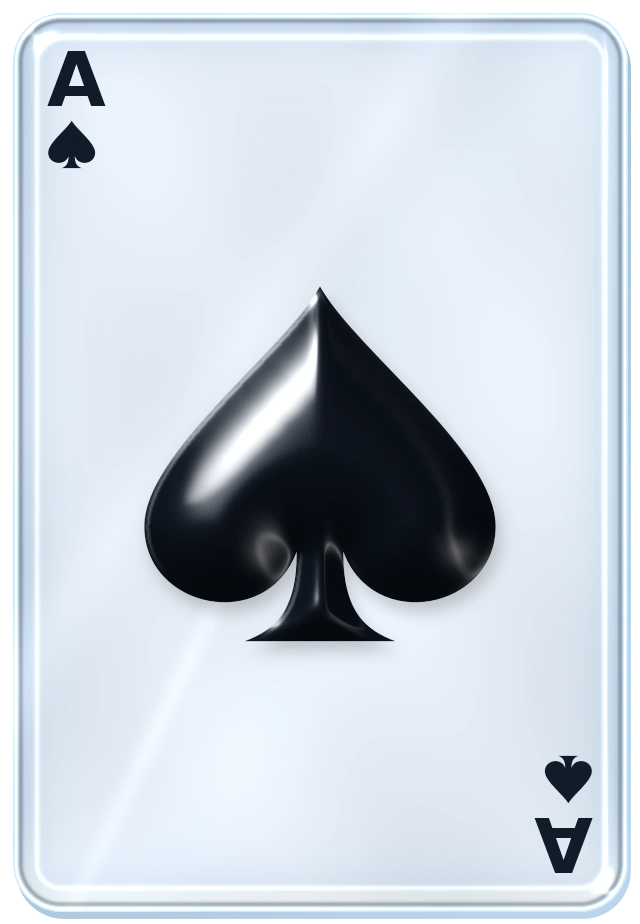
- Foundations — four empty piles you build from Ace to King, one suit each.
The moves you can make
- Build down in the tableau. Put a card on a tableau card one rank higher and of the opposite colour: a red 6 on a black 7, a black Queen on a red King.
- Move runs together. A face-up sequence that already alternates colours and steps down by one can move as a group, as long as its top card fits where you drop it.
- Turn hidden cards up. When you move the last face-up card off a column, the card underneath turns face up. Uncovering these 21 hidden cards is most of the game.
- Fill an empty column with a King. Only a King, or a run headed by a King, may move into an empty column.
- Build the foundations. An Ace starts a foundation. After that, add the next card of the same suit: the 2 of hearts on the Ace of hearts, then the 3, and so on.
- Draw from the stock. Tap the stock to turn cards onto the waste, then play the waste's top card to the tableau or a foundation.
- Recycle the stock. When the stock runs out, turn the waste back over to make a new stock and keep going. On VSolitaire there is no limit on how many times you go through the stock.
Draw 1 or Draw 3
The one rule that changes most between games is how many cards you turn from the stock at a time.
- Draw 1 turns one card each time. You see every stock card on every pass, so it is the friendlier way to learn.
- Draw 3 turns up to three cards, and only the top one is playable. Cards buried in the middle of a group only come back into reach when the order shifts, which makes the game harder and the planning more interesting.
On VSolitaire you choose Draw 1 or Draw 3 before a solo game. Daily Challenge and live matches tell you which mode the deal uses.
Your first game, step by step
- Before touching the stock, scan the tableau. Play any Ace to a foundation, and any 2 that can follow it.
- Look for tableau moves that turn a hidden card face up. Those are almost always worth making first.
- When the tableau has nothing useful left, draw from the stock and check each new waste card against the columns and foundations.
- Keep going until you either clear the board or reach a point where neither the tableau nor a full pass through the stock gives you a legal move.
- When every remaining card is face up, the rest is a formality: VSolitaire can finish moving the cards to the foundations for you.
How a game ends
A game is won when all four foundations reach their Kings. Not every shuffled Klondike deal can be won, even with perfect play, so a stuck game does not always mean a mistake. If you have cycled the stock and nothing moves, start a new deal. If you think you went wrong earlier, you can undo moves one at a time and try another line.
How scoring works on VSolitaire
Every game keeps a running score. Points come from progress and are taken away for backtracking and time:
| Action | Points |
|---|---|
| Card moved to a foundation | +10 |
| Hidden tableau card turned face up | +5 |
| Card moved back from a foundation | −15 |
| Waste turned back into the stock | −20 |
| Each minute of play | −10 |
| Undo | −5 (−20 in the Daily Challenge) |
The timer starts with your first move. Winning games in a row builds a win streak, and the streak multiplies the points you earn: each consecutive win adds ×0.1, so a five-win streak plays at ×1.5. Losing or abandoning a game resets the streak.
Five beginner mistakes
- Drawing first, looking second. The stock is always there. Tableau moves that reveal hidden cards are not.
- Emptying a column with no King to fill it. An empty column is only useful when you have a King ready to move in.
- Racing every card to the foundations. Aces and 2s should go up at once. Higher cards are sometimes more useful left in the tableau, where other cards can be built on them.
- Forgetting about runs. You can move an entire face-up sequence, not just its bottom card.
- Giving up too early. Before you call a game lost, do one more full pass through the stock and check every column.
Where to go next
Once the moves feel natural, read the complete Klondike rules for the edge cases, then the strategy guide to start winning more often. When you want company, the Daily Challenge gives everyone the same deal, and VS lets you race another player on one shuffle.
Build the foundations
Start each foundation with an Ace. Add cards of the same suit, in order, up to King.
Work the tableau
Build down in alternating colors. Only Kings can move into empty tableau spaces.
Use the stock
Draw cards to the waste. Play its top card to a foundation or a valid tableau column.
Stock
Waste
Foundation
Tableau
Layout diagram. Numbers identify the seven tableau columns, not card ranks.
A few things you might be wondering
Is every solitaire game winnable?
Not every shuffled Klondike deal can be solved. If you run out of legal moves, you can start a new game and try a different deal.
What’s the difference between Draw 1 and Draw 3?
Draw 1 turns over one stock card at a time. Draw 3 turns over up to three. In either mode, only the top waste card is playable. Check the selected game’s settings for its stock and replay rules.
How can I play with friends?
Open Play With Friends to choose an available mode. Live games and asynchronous shared-deal challenges are different experiences; the selected mode tells you how you will compete.
What if I make a mistake?
Use Undo when it is available to take back a move. Check the current mode’s rules for any effect on scoring or eligibility. Starting or restarting a game may replace your current progress.
Learn
Your preferred layout
Choose left- or right-handed play.
A little competition
Play with friends or try the daily deal.
Play in your browser
No app to install. Open a game and play.
Set the atmosphere
Soft Daylight or a quieter Dusk theme.
Explore more
Find a guide, a new game, or a little inspiration.